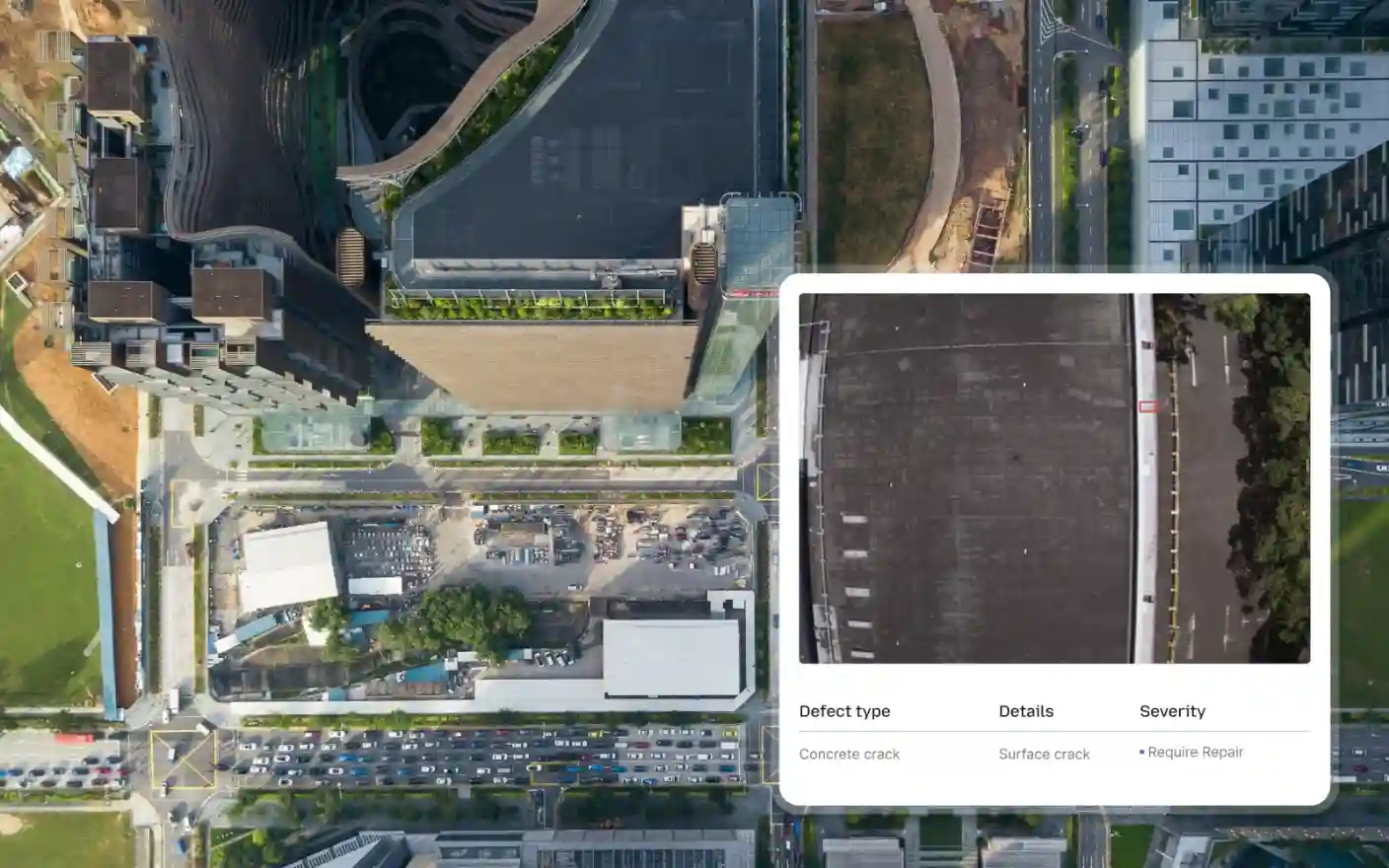
Facade inspection cost in Singapore depends on building height, access method, facade material, and report scope.
Some quotes cover only drone capture or a basic visual check. A full PFI budget includes professional review, defect records, and report-ready documentation for repair decisions.
Use this guide to compare cost factors, quote inclusions, and excluded work before requesting a final price.
Quick Summary
- A full PFI-ready facade inspection generally starts from SGD 10,000 and rises with building height, facade size, access, and report scope.
- Compare quotes by capture work, access equipment, professional review, report outputs, and excluded services.
- Drone inspection reduces access costs, but close-range checks, professional fees, and repair work remain separate expenses.
How Much Does Facade Inspection Cost in Singapore?
Facade inspection cost in Singapore ranges from SGD 10,000 to SGD 19,000+ for a full PFI-ready inspection, based on building height and inspection scope.
These figures are early planning estimates. Final pricing depends on building size, facade material, site access, report requirements, and professional involvement.
Check any lower quote carefully. It may exclude professional review, close-range checks, defect records, severity grading, or report preparation for PFI documentation.
What Affects Facade Inspection Cost?
Facade inspection cost rises when the building takes longer to capture, harder to access, or requires more detailed defect records.
Building Height and Facade Area
Taller buildings need more elevation coverage and more image review. Larger facades also create more photo records, defect notes, and report pages.
Height also affects access planning. A clear high-rise elevation is easier to inspect than a lower building surrounded by narrow setbacks, roads, trees, or restricted flight zones.
Facade Material and Design
Different facade materials show defects in different ways. Glass curtain walls, tiles, stone, concrete, and metal panels each need a different review approach.
Complex designs add more work. Balconies, fins, ledges, cladding joints, recessed walls, and mixed materials create more inspection points.
Site Access and Equipment
Drone access keeps the inspection setup leaner when the site has enough clearance. Blocked elevations, nearby traffic, dense surroundings, or restricted airspace add planning time.
Some areas still need rope access, boom lifts, gondolas, or scaffolding for close-range checks. Equipment rental and manpower add to the final cost.
Professional Review
PFI-related work needs more than image capture. A qualified review adds cost because the findings must be checked, classified, and documented for compliance or repair decisions.
Keep this separate from the drone fee when reviewing a quote.
Report Scope
A basic photo report costs less than a complete facade inspection report with severity grading, elevation references, repair notes, and follow-up recommendations.
The more detailed the record, the easier it is for owners, engineers, and facility teams to plan remediation after the inspection.

What Is Included in a Facade Inspection Quote?
A facade inspection quote should state the scope before site work starts. Without that detail, a full PFI-ready report and a basic drone capture package can look like the same service.
Check whether the quote includes:
- site review and inspection planning
- drone capture, visual inspection, or both
- close-range checks for selected areas
- access equipment such as rope access, boom lifts, gondolas, or scaffolding
- CAAS permit handling for drone work, where required
- structured defect records with photo evidence
- severity grading and elevation mapping
- inspection report preparation
- repair or rectification recommendations
- PE, RA, FI, or RFI review, if required for the project
A lower quote does not necessarily mean the service is incomplete; the difference usually comes down to what is included in the scope. Some quotes stop at image capture and a short visual summary, while others include the review and report work needed for repair decisions.
Drone vs Rope Access vs Scaffolding Cost
Drone facade inspection reduces the need for rented access equipment when the facade has clear elevations and enough site clearance. Rope access, boom lifts, gondolas, and scaffolding raise the budget because they add equipment, manpower, work-at-height planning, and longer site time.
Drone inspection does not replace every access method, as some situations still require close-range or physical inspection. It works best as the first layer of facade review because it captures large areas faster and helps identify where closer checks are needed.
For cost planning, separate the drone survey fee from rope access, lift, gondola, or scaffolding line items. That makes the quote easier to compare and reduces surprise charges after the first site review.
BCA PFI Requirements That Affect Cost
PFI cost includes more than the site inspection because Singapore’s Periodic Facade Inspection framework requires qualified review and formal documentation.
PFI applies to buildings that are more than 20 years old and above 13 metres in height. Building owners need to appoint a Competent Person, and the inspection must include proper defect records, classification, and repair or rectification recommendations.
These requirements affect the quote in three areas:
- Professional involvement: The price should account for the Competent Person and, where needed, PE, RA, FI, or RFI support.
- Close-range inspection: Selected facade areas may need closer checks after the first visual review.
- Report preparation: PFI documentation should include photo evidence, defect classification, severity grading, location references, and remediation notes.
Separate drone capture from the compliance-related work when reviewing a quote. The drone survey provides facade evidence; the professional review and report make the findings usable for PFI decisions.
How to Compare Facade Inspection Quotes
Compare facade inspection quotes by scope, not headline price. The total only matters after each provider explains what the price includes.
Ask each provider to separate the quote into five parts:
- Capture work: drone survey, visual inspection, or both
- Access work: rope access, boom lift, gondola, scaffolding, or no added equipment
- Professional review: Competent Person, PE, RA, FI, or RFI involvement
- Report output: defect records, severity grading, elevation mapping, and repair notes
- Excluded work: permits, extra site visits, close-range checks, or post-inspection support
Check the assumptions behind the price. A lower quote may reflect clear drone access, fewer elevations, limited report detail, or separate professional fees. A higher quote may include closer inspection, more detailed defect mapping, or documentation prepared for PFI review.
Before approving a quote, ask:
- Does the price cover all elevations?
- Who reviews the findings?
- Are professional fees included or charged separately?
- Does the report include severity grading and location references?
- What extra work triggers additional charges?
A clear quote explains the inspection method, review scope, report details, and any exclusions upfront, so you know exactly what you’re paying for before the work begins.
Conclusion
Facade inspection cost in Singapore depends on more than the site visit. Access, professional review, report depth, and PFI documentation all affect the final quote.
Before approving a provider, check what the price includes, what is excluded, and who reviews the findings. For early budgeting, use a PFI Cost Calculator to estimate the cost based on building height, facade type, access needs, and report scope.
After budgeting, the next step is making sure the inspection record is usable. H3 Zoom’s facade inspection platform turns drone and visual data into structured defect records, severity grading, location references, and report-ready documentation for review and repair planning.
FAQ
Does a facade inspection quote include repair work?
No. A facade inspection quote covers the assessment, findings, and report unless repair work is clearly listed.
Repair or rectification work is a separate cost. The inspection report should identify defects and recommend next steps, but contractors, materials, permits, and repair access need their own pricing.
How long does a facade inspection take?
The timeline depends on the building size, access conditions, inspection method, and report scope.
Most facade inspections take 1 to 5 days for site work, with report preparation taking another 3 to 10 days depending on complexity. Drone capture for a smaller or simpler building is often completed within a day, while rope access or scaffold-based inspections need more site time.
Report preparation takes longer when the project needs severity grading, elevation mapping, professional review, and PFI-ready documentation.
Does every building in Singapore need Periodic Facade Inspection?
No. PFI applies to buildings that are more than 20 years old and above 13 metres in height, with specific exceptions under BCA’s framework.
Newer buildings, lower structures, and excluded building types follow different inspection or maintenance needs. Owners should confirm their building status before budgeting for PFI.
Is a drone inspection report enough for PFI?
Drone inspection provides visual evidence, but the report still needs proper review and documentation for PFI use.
For compliance-related work, the findings need defect classification, severity grading, location references, and professional review. Drone capture is the evidence layer, not the full compliance process by itself.
What happens if defects are found during facade inspection?
The report should identify the defect type, location, severity, and recommended repair or rectification action.
Loose tiles, cracks, spalling concrete, corrosion, or failed fixings need prompt follow-up because they create safety risk. After the inspection, owners should use the report to plan repairs, assign contractors, and keep records for future review.